







When the first reports of Hamas’ “Operation Al-Aqsa Flood” (7 October 2023) against Israel emerged, a wave of shock rippled across the world. On one hand, Western media fanned winds of fury and hatred, while on the other, a surge of sympathy arose – fuelled by the sense that, at last, a decisive military strike had been launched against Israel’s seemingly endless oppression. Among broad sections of the left, this move was interpreted as a sign that the Palestinian resistance, long in decline, had finally shaken itself awake and risen to its feet. Discussions began that this could destabilise the Middle East’s power dynamics, forcing Israel into retreat and shifting the tide in Palestine’s favour.
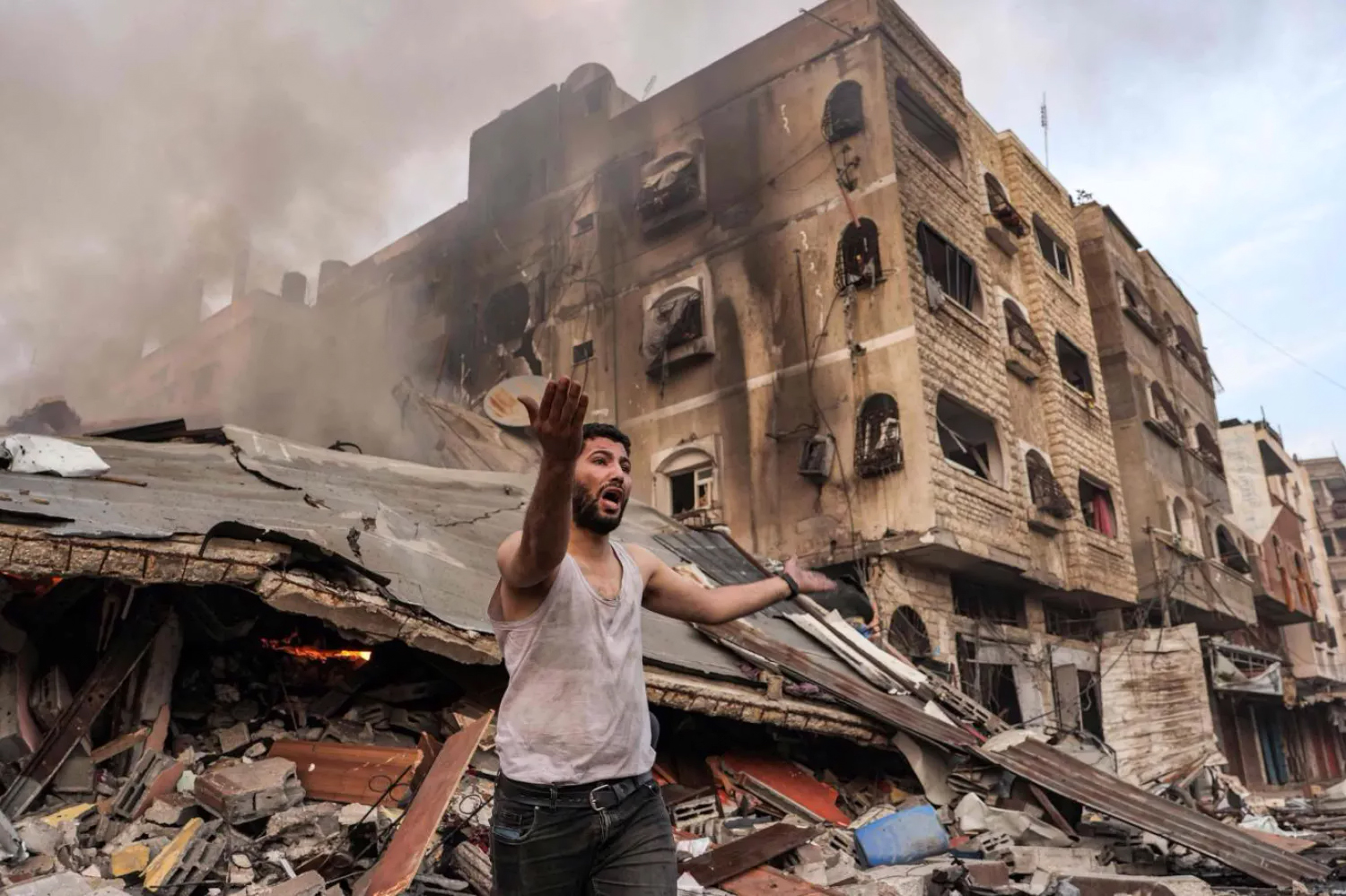
However, it soon became clear that these assessments and expectations –aside from destabilising the Middle East’s balance of power – were misguided. In the relatively short period that followed, a cascade of rapid and staggering developments unfolded. Israel, backed by the US and Europe, razed Gaza to the ground, massacring tens of thousands of Palestinians indiscriminately –women and children included–eliminated key figures within Hamas’ leadership, and unleashed a genocide against the Palestinian people.
Not content with these actions, the imperialist-Zionist alliance expanded its attacks into Lebanon and Syria, dealing heavy blows to Hezbollah and the Assad regime. Much like its campaign against Hamas, Israel assassinated a significant portion of Hezbollah’s leadership in Lebanon. Then, barely a year after “Operation Al-Aqsa Flood,” the Assad regime –despite enjoying the patronage of a major imperialist power like Russia and hosting its military bases– collapsed in Syria. Although the imperialist war since 2011 had been marked by fluctuating intensity and occasional stalemates, the regime crumbled like a house of cards within weeks, as if a switch had been flipped. In Syria, Hay’at Tahrir al-Sham (HTS) –a force of entirely different political character– was installed in power. While less dramatic than in Syria, Lebanon’s political landscape also underwent significant shifts. Hezbollah, severely weakened by relentless strikes, saw its influence sharply decline and failed to mount any meaningful response to Israel’s successive attacks. Similarly, Yemen’s Houthis became targets of US-Israeli aggression, subjected to heavy bombardment in multiple waves.
And finally, of course, there is the direct strike on Iran. The imperialist-Zionist aggression, which began in Gaza and swept through Lebanon and Syria with devastation, now directly targeted Iran – the regional patron of anti-Israeli forces in these areas. Despite enjoying significant influence in the region and the backing of major imperialist powers (Russia and China) that generally support and collaborate with it, the Mullah regime in Iran failed to mount an effective response to the Israeli-US aggression. The regime lost much of the aura surrounding its supposed strength as it sacrificed key leaders, officials, and military strategists, suffered severe damage to critical military and technological facilities, and even exposed its inability to protect the lives of its highest-ranking leaders and cadres. In retaliation, it launched numerous missiles, but aside from forcing Israel to expend a series of costly munitions, these strikes yielded no tangible results.
Throughout this war, which broadly meant heavy losses and a decline in power for Iran and its allied forces, assessments were made at nearly every stage that Israel and the US were on the verge of collapse –as if they were about to imminently falter. These assessments could, in fact, be seen as a natural extension of the initial optimistic expectations that had risen in the context of the Palestinian cause following Operation Al-Aqsa Flood. Both in pro-government media and Islamist circles in Turkey, as well as in various left-wing outlets, these analyses frequently emphasized that the imperialist-Zionist aggression was stumbling, struggling to achieve its objectives, and failing – while claiming that the “Axis of Resistance” had proven resilient. As the conflict progressed, the destruction in Gaza only grew more catastrophic, with civilian casualties mounting into the tens of thousands, and the imperialist-Zionist offensive escalated relentlessly. Yet, despite this, the rhetoric insisting on Israel’s failure remained largely unchanged.
For example, when the war extended to Syria, HTS’s rapid advance caused astonishment. There were widespread expectations that Iran-backed forces would soon intervene, that Russia would throw its full weight into the fight and swiftly reverse the tide. While these expectations persisted, major cities fell one after another in the following days, until Damascus itself suddenly came under threat and surrendered to HTS without any resistance. A similar mood emerged during Iran’s direct confrontation with Israel, when only a small fraction of the hundreds of missiles Iran launched managed to penetrate Israel’s air defence systems. “Iran is finally showing its strength,” some declared, “Israel’s long-anticipated downfall is beginning.” Likewise, as both Syria and Iran came under bombardment at various stages, attacks were expected from Hezbollah forces in Lebanon that would block Israel’s advances. Yet none of this materialized.
As internationalist communists, we have consistently emphasized in our assessments from the outset that this entire process is part of the ongoing imperialist world war. Within this framework, we argued that a new phase had begun in the US-led imperialist camp’s project to reshape the Middle East under the Greater Middle East Initiative (GMEI). We stressed that the issue far transcends –and cannot be reduced to– the Palestinian national cause, for example, and that without rallying an organised mass workers’ movement, no regional capitalist force (state or non-state) could thwart this imperialist offensive. Without a workers’ movement, we maintained, the outcome would hinge on the balance of power among the major imperialist blocs.[1]Indeed, as Russia largely stood back –remaining silent (or refraining from effective intervention) due to its entanglement in the Ukraine conflict– and as China likewise failed to assert itself meaningfully, the process in the Middle East unfolded along the lines dictated by the US and Israel, who poured their power into the theatre, thereby altering the regional balance of forces.
It has become unmistakably clear that the Middle East has entered a new phase. Today, Gaza remains subjected to a genocidal policy of annihilation, pursued with utter impunity – where even the most basic food access for Gazans is systematically blocked. Moreover, Israel has moved to occupy Gaza completely, and the West Bank is also on the line. There are now unmistakable signs that a new plan is being implemented to eradicate Hezbollah entirely from Lebanon. The most concrete evidence of this is the Lebanese government’s recent decision, under US pressure, to move toward disarming Hezbollah. Simultaneously, the US and Israel have finally achieved their long-sought breakthrough to encircle Iran from the north by securing a foothold in the Zangezur corridor between Azerbaijan and Armenia.
To reiterate, this new phase is characterized by a dramatic shift in the region’s balance of power. Iran and Russia have suffered significant losses of influence, while the US and Israel have seen theirs expand substantially. This development exposes the inaccuracy and lack of foresight in the assessments made by large sections of the socialist movement – a failure rooted in their tendency to align with bourgeois forces of varying stripes (Hamas, Hezbollah, Iran, Russia) simply because these forces oppose US imperialism at this moment, rather than grounding their stance in the working class. In this very vein, much of the left movement argued during the war’s recent Iran chapter that it was necessary to side with the Iranian state. To cite relatively recent examples: this mirrors their earlier positions of supporting Saddam’s Iraq, Gaddafi’s Libya, and Assad’s Syria. As we’ve seen, such episodes recur constantly, with attitudes that might be dubbed “defending the smaller against the greater” persistently repeated in the name of a so-called left stance.
Capitalism is mired in a historical crisis, and as one manifestation of this, a distinct form of imperialist world war is currently underway. This is a protracted war – one stretched thin across time and space. A significant portion of the world’s conflicts now form links in this war’s chain: the war in Ukraine, the war in Gaza, the war in Syria, the war with Iran… Tragically, this war will undoubtedly spawn many new fronts and chapters, for the imperialist struggle over hegemony and redivision of spoils remains unresolved. In this context, for the working class to adopt a correct line toward the war as a whole and its successive phases, we must re-examine the roots of the aforementioned attitudes and analyses – and revisit the nature of imperialism and the meaning of anti-imperialism itself.
The harmful legacy of a historical period
The tendencies we might describe as an underestimation of imperialism and a dilution of anti-imperialism –though primarily rooted in theoretical distortions introduced by Stalinism– must also be understood as nourished by illusions about the realities of a particular era. The successes achieved by peoples under the yoke of imperialist in their struggles for independence during one historical period inadvertently laid the groundwork for misconceptions about both the nature of imperialism and the struggle against it. The post-World War II era could be called the golden age of anti-colonial national liberation wars. That dozens of underdeveloped countries fought and won independence from colonial powers during this period played a decisive role in cementing the erroneous views imposed by Stalinism, creating a persistent illusion.[2]
The attainment of independence by these countries, their liberation from colonial bondage, was undoubtedly a historically significant development – a major step forward. Yet this progress became a pretext for distorters to falsify crucial concepts. In this atmosphere of illusion, it was all too easily forgotten that imperialism represents the monopoly stage of capitalism where finance capital becomes dominant, and that one cannot be anti-imperialist without being anti-capitalist. The termination of colonial status for these countries was mistakenly seen as a defeat or significant weakening of the imperialist system. Some even believed that the spread of independence struggles would lead to the collapse of imperialism altogether. Theories proliferated claiming the imperialist system survived only through its colonies – that deprived of them, it would crumble. All these theories were advanced in the name of Marxism and became accepted doctrine. Meanwhile, the fundamental truth –that imperialism can only be overcome through the anti-capitalist revolutionary struggle of the working class– was obscured. In keeping with this deviation, revolutionary socialist struggle based on the working class was gradually abandoned.
During this period, no satisfactory answers were given to the obvious question: how did capitalism, while being progressively deprived of its colonies worldwide, not only avoid collapse but actually experience its most vigorous historical upswing? This undeniable fact demonstrated unequivocally that capitalism in its imperialist stage had no need to maintain weaker and backward countries in colonial status. Yet recognizing this did not require waiting through an entire historical epoch – it only demanded a proper grasp of Marxism’s classical theories on the nature of capitalism and imperialism.
The extreme manifestation and most symbolic expression of these misconceptions was the notion of imperialism as a “paper tiger.” This outlook plainly portrayed imperialism as weaker and more susceptible to being overthrown than it actually was. However, little consideration was given to the actual meaning behind imperialist powers’ post-WWII colonial retreats and military defeats, or the specific conditions under which these occurred.
Because this reckoning never came, even after the historical period of capitalist decolonization ended, the same non-Marxist mental patterns persisted on the left. In the new era, this flawed understanding repeatedly surfaced during US imperialism’s assaults on various regions of the world.
The conditions of the earlier period marked by the wave of national liberation struggles were fundamentally different from those of the present era. First and foremost, the existence of the USSR as a superpower counterbalancing U.S. imperialism created a crucial distinction. This non-capitalist superpower established a global equilibrium and provided significant room for manoeuvre for forces engaged in national liberation struggles. Moreover, in its political rivalry with U.S. imperialism, the USSR frequently extended material and military support to various anti-colonial national movements across multiple fronts. Additionally, it offered diplomatic backing at the international level and general ideological support. Consequently, apart from the characteristic penetrative power of finance capital in the imperialist epoch and the postwar economic upswing, imperialism had to contend with the risk of losing backward capitalist countries to the Soviet bloc.
Secondly, there existed an organized socialist workers’ movement in imperialist countries and in many other capitalist countries where a working class had more or less taken shape. This class movement, along with accompanying socialist tendencies of various stripes, constrained the maneuvering room of imperialist rulers and complicated their interventions in colonial and backward countries. The Vietnam War stands as one of the best-known examples of this dynamic. Alongside the existence of the USSR, the strong anti-war movement in the U.S. itself became one of the decisive factors determining the war’s outcome.
It should be added that while imperialism did not essentially require colonial status to establish hegemony over underdeveloped countries, it would not withdraw from these regions willingly – indeed, in many cases, it would exact heavy costs. But colonial status was not indispensable for domination; as Lenin had pointed out in his time, politically independent states could often be preferable for imperialism.
On the other hand, there is a crucial point that must be underscored to highlight what distinguishes today's stance toward wars. With the historical end of colonial status worldwide –with rare exceptions– contemporary conflicts and wars now occur between independent nations that are all capitalist, yet occupy different tiers within the imperialist system's hierarchy.
In any event, it is plain that today’s world presents far less favourable conditions for bourgeois forces compelled to confront imperialist powers compared to the past. Within the framework of the factors we have outlined, the present situation might be characterised thus: these forces are increasingly drawn to seek backing amongst rival imperialist blocs, whilst anti-war movements in imperialist nations now lack any substantial organised working-class component. This state of affairs considerably eases pressure on US imperialism –as the preeminent imperialist power with no military peer– permitting it to act with greater recklessness than in previous eras.
The small against the large?
Left-wing tendencies that fail to ground anti-imperialist struggle in the revolutionary struggle of the working class –or which have abandoned such hope– historically drifted towards a “Third-Worldist” path. This essentially nationalist tendency, which imposes roles far beyond their capacity upon the bourgeoisies and petty-bourgeoisies of lesser capitalist nations within imperialism’s hierarchy, persists within the left today in its fundamental outlook.
Such tendencies sever anti-imperialist struggle from anti-capitalist struggle (that is, from proletarian revolutionary struggle), reducing it to the defence of relatively weaker states. This line reveals itself most clearly during wars, occupations and annexations. In these situations, support for the smaller or weaker state (which, despite various rhetorical disguises, ultimately means support for that country’s bourgeoisie) is typically theorised by categorising the nation as “oppressed”. That such approaches endure despite a wealth of historical experience is nothing short of lamentable.
When US imperialism invaded Iraq in the 1990s and 2000s, those who viewed Iraq as the “oppressed” nation and the US as the “oppressor” argued that an American defeat would paralyse and weaken imperialism for an entire period. Elif Çağlı characterised such assessments as follows: they represented positions that underestimated the manoeuvring capabilities of imperialist powers while overlooking the imperative of proletarian international organisation and struggle.
“While the defeat of an imperialist power in some adventurist enterprise against a small nation might boost the morale of workers and toilers worldwide, the analysis must not be one-dimensional, nor should such possibilities ever be overstated. Without revolutionary vanguard organisation at the international level, it would be a grave error to assume such situations could spontaneously create significant opportunities for working-class struggle. In fact, there’s a crucial point overlooked in this accounting of large versus small states. Major imperialist powers possess a large manoeuvring capacity when it comes to regional wars they’ve instigated or military operations within their spheres of influence – both in extricating themselves from unfavourable outcomes and in recasting defeats as «victories». By contrast, the bourgeois regime of a smaller capitalist country subjected to military intervention may indeed suffer genuine destabilisation from defeat. In short, those who in today’s world lapse into pseudo-anti-imperialism by proclaiming «let’s support the smaller bourgeoisie against the larger» during imperialist-provoked regional wars are simultaneously turning a blind eye to revolutionary situations emerging in the attacked countries.”[3]
We may characterise the position of smaller or less developed capitalist countries in terms of working-class struggle through Elif Çağlı’s own words:
“In today’s world, various rivalries and conflicts of interest exist between large and small capitalist countries – yet these do not fall within the framework of struggle between oppressor and oppressed nations. Let there be no misunderstanding: due to imperialist interventions and impositions upon weaker capitalist countries, the labouring masses in these nations suffer intensified oppression. However, unlike the conditions in colonial countries where the bourgeoisie could once play a progressive historical role against pre-capitalist archaic structures, we now face nations fractured by sharpened class antagonisms. What stand before us today are capitalist states with their own political institutions and bourgeois apparatuses of domination. The former prominence of the «oppressor vs oppressed nation» question has been superseded by the «oppressor vs oppressed class» contradiction under capitalist states.”[4]
On the stance that should be defended regarding the revolutionary struggle of the working class in such wars, Çağlı emphasised the following points:
“The struggle against military interventions by imperialist states must not be waged to defend «national unity» (!) with the bourgeoisie or to strengthen bourgeois regimes, but for the realisation of social revolution. Therefore, communists must remain supremely vigilant in all countries where the bourgeoisie holds power during wartime, and must recognise as their fundamental task the liberation of the working class from the shackles of bourgeois «national ideology». (...) In the heat of war, workers in all capitalist countries must advance with the aim of overthrowing their own bourgeois regimes and transforming imperialist wars into civil war.”[5]
The question of the working class’s stance inevitably arose during the recent US-Israeli aggression against Iran in June – a war that began and was suspended after twelve days. Here too, certain sections of the socialist movement advocated similar positions, arguing that one must stand with Iran. During that phase of the war, we articulated the necessary stance in an article written at the time:
“It is undoubtedly of fundamental importance that the working classes in these most powerful and wealthiest imperialist countries primarily target their own governments and Israel in their struggle. The same holds true for the working classes of other countries, including Turkey. However, this does not automatically lead to the conclusion that Iran must be defended against these aggressive powers. Iran, under attack, is not an «oppressed» or «small» nation but rather a major regional power pursuing imperialist policies. If Israel is a reactionary regional power, we must not forget that Iran too is a reactionary regional power with nuclear capabilities and ballistic missiles. If Israel is an ally of the US and other Western imperialist powers, Iran is likewise a regional influential partner of major imperialist powers like China and Russia. At its deepest level, this war is being waged between these two camps. Moreover, one cannot ignore the reality that Iran’s fascist Mullah regime is a tyranny that systematically oppresses socialists, progressives, democrats –and above all the working class– as well as minority peoples (primarily Kurds) and women. From the working-class perspective, as Lenin emphasised, it matters not who «started» the war or who is the «aggressor». We are not bourgeois strategists; we view developments not through their lens but from the standpoint of working-class interests.”[6]
This position represents the proletarian revolutionary stance – shaped by the experiences of past periods and consistently defended for years by revolutionary Marxism.
In summary, revolutionary Marxists take the side of neither Israel nor Iran in this war. Marxists focus principally on the class character of the warring parties, analysing which class interests the war serves, for what aims, and as a continuation of which policies. Here, we are dealing with two regional capitalist powers, both connected to rival major imperialist forces. Each side pursues policies aimed at expanding or consolidating its regional influence. And these events are unfolding within the broader framework of the ongoing third imperialist world war, which is being fought in its own distinct manner. This specific war is merely one link in the larger chain of that great war. Precisely for this reason, the “12-Day War” could not remain a mere twelve-day conflict. New wars and clashes are inevitable as links in this greater war. On one side, we have forces attempting to establish a new order in the region, desired primarily by US and other Western imperialist powers. On the other, we have a power aligning itself with the imperialist interests of rivals like Russia and China in the region. Both policies are reactionary from the standpoint of the working class; both are enemies of the working class. The working class cannot take sides in this reactionary bourgeois line-up.
During the June war against Iran, the stance of internationalist communists was consistent with this line. The most correct way to oppose imperialist aggression from the working-class front is to strive to utilise the war to overthrow the bourgeois regimes on both sides. The revolutionary working class, following the example of the Paris Commune, must seek to exploit any emerging revolutionary opportunities to the fullest.
[1] Marksist Tutum, Palestinian People in the Grip of Imperialist War, 12 October 2023, https://en.marksist.net/node/8084
Marksist Tutum, What do the Latest Developments in the Middle East Tell Us?, 3 December 2024, https://en.marksist.net/node/8394
Elif Çağlı, Notes on the Latest Developments in the Middle East (December 1, 2024), https://en.marksist.net/node/8404
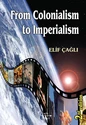
[2] For a Marxist approach, see Elif Çağlı, From Colonialism to Imperialism, August 2002, https://en.marksist.net/node/3132
[3] Elif Çağlı, From Colonialism to Imperialism, “Imperialist era and the distinction between just and unjust wars”, August 2002, https://en.marksist.net/node/3285
[4] Elif Çağlı, From Colonialism to Imperialism, “Imperialist era and the distinction between just and unjust wars”
[5] Elif Çağlı, From Colonialism to Imperialism, “Imperialist era and the distinction between just and unjust wars”
[6] Levent Toprak, Israel’s Attack on Iran: A New Phase in the World War, 20 June 2025, https://en.marksist.net/node/8537
link: Levent Toprak, As the Middle East is Reshaped: Erroneous Attitudes in the Name of Anti-Imperialism, 24 August 2025, https://en.marksist.net/node/8584