







Trump’s inauguration ceremony on January 20 witnessed many firsts. One of them was Trump signing numerous decrees in a large sports hall, at a table placed in the middle of the hall, witnessed by thousands of people, right after taking the oath. The first of what were called “cancellation decrees” was one that granted amnesty to members of the fascist gangs who stormed Congress, whom they referred to as “January 6 prisoners”. Approximately fifteen hundred perpetrators convicted of the most iconic raid in US history gained their freedom with a single signature. Then, previous regulations on gender, affirmative action and diversity policies were cancelled one by one. This fascist show peaked when Elon Musk took the podium and greeted the audience with a Nazi salute.
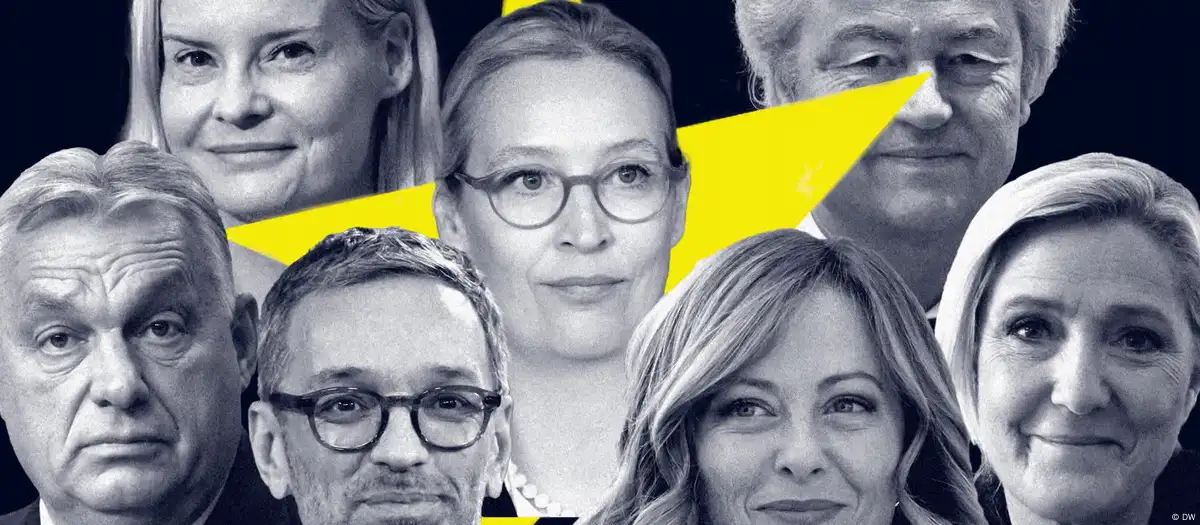
Another first was a striking symbolic indication of the kind of political atmosphere that would characterise the period we were entering. It was the first time foreign leaders were invited to presidential inauguration ceremonies in the USA. Trump not only broke the tradition but filled the inauguration ceremony with right-wing politicians, especially fascists: Argentine President Milei, Italian Prime Minister Meloni, fascist British politician Nigel Farage, and representatives of the fascist Alternative for Germany (AfD). Brazil’s former fascist President Jair Bolsonaro could not attend the invitation as he was banned from leaving the country. Even though they were not present at the inauguration ceremony, it is known that Indian Prime Minister Modi and Hungarian Prime Minister Orban, who were among the invitees, are also part of this fascist cooperation.
All of them are engaged in efforts for the development and electoral success of fascist movements in all other countries, especially EU countries, providing financial support, consultancy, and coordination. Moreover, Putin also provides various types of support to them. This close co-operation may seem surprising or even paradoxical at first glance. This is because racist nationalism, a common point in fascist discourse, is expected to be a factor that divides, rather than unites, politicians from various nations. But this is not the case.
Far-right movements all over the world advocate the same or very similar political programs and use the same discourses: chauvinistic nationalism, the sanctification of the family and the state, xenophobia/anti-immigrant sentiment in some countries, anti-LGBT+ stances, and opposition to abortion and vaccines. In fact, these themes, which are more or less inherent to all right-wing politics, are pushed to their extreme by fascist or fascistic movements and propagated. In far-right movements in the Western world[1], at the discourse level, “new” activism goals such as destroying the threat of “cultural Marxism”[2] and “woke culture”[3], preventing the “collapse of civilization”, and stopping the immigrant “invasion” are also put forward. In EU countries, this includes opposition to “globalist domination” that erodes some of the powers of the nation-state. They also stand on the same line regarding the most prominent foreign policy issues: for example, most are against the continuation of the Ukraine-Russia war, but give full support to the massacres perpetrated by Zionist Israel against Palestinians.
The essence of this programme is not what distinguishes far-right movements from traditional conservative parties. This is because center-right parties can also advocate similar things in a more moderate way. Two main differences can be mentioned between them. The first is the hostile (or “restructuring”) approach of the far-right, and especially the fascist movements representing its extreme, to democratic or international institutions. The second is the organization and readiness of lumpen masses and the most backward sections of the working people as terror gangs, without being bound by legal limitations. Moreover, such formations are quite active in some cases. From the Golden Dawn gangs in Greece to racists in the USA and fascist gangs in Italy, in many examples, street terror directed at strikers, democrats, Black people, and socialists is by no means insignificant. We must not forget the murders committed by neo-Nazi groups in Germany against immigrants.
Today’s fascists do not directly attack the concept of democracy for now, nor do they talk about destroying democratic institutions. Instead, in places where it suits them, i.e., where they seize power, while savagely attacking democratic rights and freedoms, they adopt a discourse that reduces democracy to the ballot box. This should sound familiar. With this sanctification, they say, “we came to power through elections, our people brought us to power to implement the program we advocate, so there should be no restrictions on our actions”. Based on this, they create hatred against legal limitations, control mechanisms, ways of objection etc.. They brand objections and brakes from the system’s checks and balances as “the reaction of the establishment” and create an impression as if they are outside and against the capitalist functioning.
Today, fascist ideologues in the Western world do not construct their discourse around a narrow concept of nationalism. They can present themselves as “participants in a global struggle against a global enemy”. The fascist movement expands its activities based on transnational connections and co-operation between parties and organizations. There is intense information sharing, unity of discourse, transfer of experience, and commonality of methods of action among such organizations. When we consider that the most common ideological axis of fascism is hysterical nationalism, this situation seems to indicate a contradiction: the prominence of international co-operation among nationalist movements! This co-operation appears on various grounds: institutional connections and collaborations between such parties, multiple fascist/fascistic parliamentary groups in the European Parliament, annual international conferences regularly attended by most of these parties (such as CPAC - Conservative Political Action Conference, led by Steve Bannon), solidarity networks, financial relations among them, etc.
This situation raises some questions. Despite all these facts, is it correct to consider the fascist movements emerging in many countries today as movements that respond independently to the specific problems of the society in which they develop, possessing entirely independent grounds for their existence (in fashionable terms, as “native and national”)? If the far-right movement is an international phenomenon, was this situation as valid in the past as it is today, or is this an entirely new phenomenon? Does the phenomenon we call globalization have an effect on the formation and development of fascist movements, and if so, what is it? Based on their criticisms of globalist ideology and international liberal bourgeois (global) institutions, and their discourse of “taking back control of the country”, should we conclude that they have a real intention to reverse or destroy the phenomenon known as globalization?
In the field of “political science” as in all other fields of social sciences, academics from left and right (and socialists under their influence) produce polarizing answers of the “either-or” type to such questions, trying to force problems into the narrow molds of formal logic instead of approaching them with a dialectical method, forming schools of thought based on this, and in fact further obscuring the issues they supposedly want to clarify. In this article, we will try to answer the questions we posed above regarding this phenomenon called the international far-right.
The “native and national” fallacy
Fascist politicians in almost every country claim that they, unlike their opponents, are “native and national”. They criticize their political opponents for having foreign roots, receiving support from globalist organizations and international institutions abroad, complaining about the state abroad, etc., and accuse them of being part of imaginary international conspiracies. These accusations are directed most fiercely at communists, as they do not hide that they are internationalists, not nationalists. The slogans chanted by fascists in the 70s, such as “Communists to Moscow” emphasized such accusations. Authoritarian or fascist regimes do not only make these accusations to incite nationalist sentiments in the people; when they find the opportunity, they imprison many dissident intellectuals or politicians on charges of espionage. They declare all international institutions or universally accepted values as anathema, spewing hatred towards globalism with the goal of rebuilding “national sovereignty that has been stolen and destroyed”. While doing all this, they present themselves as the true and sole representatives, the purest expression, of the national. They are pristine, one hundred percent national, and have nothing to do with the international!
However, these claims are not true. The idea that far-right movements give unique and independent responses to the specific problems of the society in which they develop, and possess entirely independent grounds for their existence, has nothing to do with reality. There is an international bond, relationship, coordination, solidarity, etc., among them. Many data and facts from both the past and the present confirm this. The far-right is hostile to proletarian internationalism, that is, the idea that the distinctions between workers from different nations are in fact meaningless, that the interests of the working people are actually common, that their problems and solutions are the same, and therefore that a common struggle should be developed. But this situation does not prevent far-right ideologues from trying to forge international ties with other groups. For this reason, although each of them deifies and glorifies their own nation in their demagoguery directed at the masses, demonizing others, they do not reject the coming together and cooperation of the movements on an international basis, at least at the leadership levels.
The gaining of strength by far-right movements coincides with periods of deep social crisis. This crisis can be a system crisis affecting all modern capitalist countries more or less, or, as seen in countless examples in the past, a social crisis and a threat of proletarian revolution arising from the specific conditions of a country. In any case, since its birth in the period between the first two world wars, fascism, despite all its nationalist discourse, has always formed and developed as a directly or indirectly international phenomenon. While interconnected fascist movements rise in almost all countries shaken by this crisis during periods of system crisis, fascist movements developing in more backward countries during periods of isolated social crisis affecting those countries also take on an international dimension, at least in the context of their relations with the military and intelligence organizations of major imperialist powers. It is a well-known fact that the roots of the Grey Wolves fascist movement in Turkey extend to ties established with German fascism, and after World War II, to relations established with American imperialism through state mediation, and that the latter shaped it as a tool.[4] Similarly, all fascist military coups to date have had an international dimension as the work of army commanders selected from among those who were vetted by US and NATO.
The phenomenon called the international far-right is a product of the system crisis of capitalism
In periods of system crisis shaking the entire world, as we mentioned above, it is not difficult to see that global developments and factors stand out as the main determining factors. Today, however, capitalism is in a situation that we describe as a historical system crisis, surpassing what has been experienced in past periods. Nothing can be explained by skipping the international ground and background shaped by this crisis. Regarding how this international factor will be reflected in a particular country, the specific conditions of that country will, of course, have significant weight. For example, during the historical system crisis period we are currently experiencing, while crisis waves hit EU countries in 2008, a significant left wave first rose in Greece and Spain, which were severely wounded, and Greece almost turned from a revolutionary situation. Following the betrayal and disappointment created by left parties like Syriza and Podemos, whose reformist qualities quickly became apparent despite presenting themselves as outside the system, fascist movements launched an attack in both countries. Similar developments followed the same line in almost all of Latin America. However, despite being less affected by crisis waves since then, the fascist movement has gained strength in Switzerland, Austria, and even Sweden, while the left has stagnated. This means that while the capitalist crisis, as a global factor, triggers a fascist dynamic in all countries, the concrete form it takes and the level of fascism's development are determined by the specific conditions of those countries.
Consequently, when evaluating the rise of the far-right, it is not correct to think that there is a sharp opposition or separation between national and international factors. These intertwine, mutually influencing and shaping each other. Given the fact that capitalism is a world system, with all countries organically linked to each other, especially under today's globalized capitalism, it is impossible to understand local or national factors in isolation from their international, transnational, or global connections. Therefore, the far-right cannot be considered as separate and independent national cases These movements are intertwined, articulated, and connected to each other.
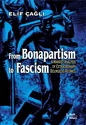
While the academic world and some Western socialists debate the phenomenon of the international far-right today, we should not forget that until recently, they claimed fascism had been buried in history. As early as 2004, Elif Çağlı, in her book From Bonapartism to Fascism, demonstrated that this was not the case at all. It will be useful to recall the following lines:
“There can be no attitude more wrong, dangerous and harmful for the struggle than to think that the scourge of fascism of the past century cannot be revived because it has already exposed the madness of capitalism. It was the incredible economic and social crisis that hit Europe between the two imperialist wars of division that gave life to German Nazism. Such crises go beyond the usual cyclical crises of capitalism, they are deep and shake the system to its very foundations. As long as the capitalist order exists, there will continue to be imperialist wars, the revolutionary struggle of the working class and therefore fascism.
“Whatever adjectives those who look at the escalating tensions between the imperialist powers today, at the wars of redivision that are bloodying their spheres of influence and still claim that there will never be a third imperialist war of division deserve, the situation is the same with fascism. As long as the fire does not reach their own homes, the arm-chair intellectuals in Europe and the so-called socialists who follow their lead can deceive themselves by chanting the refrain “never again” as they watch the world from their comfortable chairs. But while they are thus distracted, could it be said that in today’s world, which the imperialist powers have turned into a boiling witches’ cauldron, the danger will not gradually approach their own homes?
“Although fascist parties are on the rise to some extent in some European countries, it is true that fascism has not yet reached the level of an actual threat in these countries. But who knows what will happen tomorrow? In today’s world, which is reeling from economic crises and wars of redivision, where xenophobia and racism are on the rise, one can never underestimate the fact that the capitalist system, when it is in dire straits, can again unleash the scourge of fascism.”[5]
Following the 2008 crisis, when fascism began to raise its head even in the West, the same people still did not see the danger, and discussions about “international far-right movement” were not yet on the agenda. But in her articles written at that time, Elif Çağlı pointed out that fascism stood before humanity as a global threat, very concrete and steadily strengthening[6]. These articles analyzed the deepening authoritarian tendencies and fascist escalation with capitalism entering a historical system crisis period on a global scale. The historical limits of bourgeois democracy and the class essence of capital’s domination were laid bare, emphasizing that authoritarianism was not merely a matter of “bad leaders” but a way for the system to reproduce itself in our era. It was demonstrated that fascist movements, although they might take some unique forms in different countries, were similar responses to the crises of capitalism and originated from a common root. From this perspective, fascism is the bourgeoisie’s response to the revolutionary threat; the more global the threat, the more global the bourgeoisie’s counter-revolutionary response or preparations in that direction must be.
Contrary to those who interpret their rise today as the end of globalization, Çağlı demonstrated that the anti-globalization discourse of fascist movements was deceptive; in reality, they aimed to continue capitalist globalization in new forms, remained within the confines of the system, and tried to conceal the true enemy of the working classes. At this point, let us recall that many leftist academics fail to see the reality that capitalism is in a historical system crisis. Since they understand crisis only as collapses of the 2008 type, they need other factors to explain the rise of fascism in periods where such destructions do not occur. To reiterate, in our view, the rise of the far-right and the nationalism it glorifies since the turn of the millennium is directly linked to the global crisis of capitalism; it stems from capitalism’s historical system crisis. This rise is in reality the reaction of the most reactionary sections of the bourgeoisie to the crisis in question. Therefore, the fascist movements emerging in many countries should not be considered as nationally based reactions to specific national conditions, but as reflections of a single global phenomenon, filtered through national scale and national elements.
The contribution of globalization to the formation and strengthening of the current international far-right
If we look at the impact of globalization on fascist movements, contrary to the initial claims of liberal/globalist ideology, we see that globalization has not resulted in the overcoming of the nation-state; on the contrary, with the multi-layered problems it has created, it has created a suitable political ground for the strengthening of the far-right that sanctifies the state and the nation. Fascist movements developing on this ground in Europe targeted the current level and form of EU integration, pointing to the EU’s supranational institutions, practices, and foreign policy as the source of social problems. Interestingly, the parliament of the EU, which they heavily criticized, made a significant contribution to their natural coming together, developing common stances, setting common goals, and establishing strong cooperation among them.
The development in communication technologies and the opportunities provided by social media mean new possibilities for the propaganda of fascist movements, while also increasing the ability of people even within the base of these movements to find, communicate, and establish relationships with people of the same sick mentality living in different regions or countries. Unlike in the past, international relations, contacts, or communication are no longer limited to the leaderships of fascist movements. This situation has further spurred social media activism, allowing a successful propaganda method or material used to very quickly become part of global fascist propaganda. In a continent-sized country like the USA, countless small fascist gangs and formations with strange names can be coordinated and directed very quickly thanks to these opportunities. We know that in almost all modern countries, a part of these gangs, secretly nurtured by both the state and the big bourgeoisie, engage in online trolling, spreading fake news and conspiracy theories, and waging “information warfare”. The impact of these teams is much greater than assumed and estimated.
Countries within the hierarchy of imperialist capitalism are experiencing an unprecedented convergence, not only in terms of economic relations but also socially and culturally. This convergence also serves to make social/political/cultural problems similar in all these countries. With neoliberal policies applied in almost all countries, markets were liberalized, financialized, regulations were abolished, and the liquidation of public services undertaken by states was initiated. This homogenization globalized and homogenized the problems as well. We should also add “threats” that transcend national borders and gain global dimensions, such as environmental disasters and pandemics, especially migration. Social/cultural convergence, while strengthening the ground for workers to build a common global struggle, also irritates the conservative sensitivities of the most backward sections of society. Fascists try to create panic and profit from it by fuelling the discourse of “the nation/religion/national values are being lost”. The answers and so-called solution proposals given by fascist movements to similar problems also become similar, bringing fascists in different countries closer to each other. Moreover, bourgeois states, especially by putting forward the “threats” we mentioned and hiding behind the dilemma of “freedom or security”, are transforming into police states. The reactionary reflex shown by the system in the face of its multi-dimensional problems concretizes as authoritarianism, and as the policing measures taken in this direction normalize, fascist movements themselves and their demands also normalize in the eyes of society.
We are going through a period where everything said to “never happen again” is starting to happen again, and things said to be “impossible” are also occurring. Since the turn of the millennium, and especially since the 2008 crisis, central parties across the world, from the most advanced to the more backward capitalist countries, are shifting further to the right, and bourgeois regimes are becoming increasingly authoritarian. Some are at the beginning of this path, some in the middle, and some, like in the example of Turkey, have come a long way and reached fascism! Bourgeois governments, both left and right, that cannot produce solutions to problems are also rendering elections meaningless in the eyes of the masses. Increasingly decaying and discredited, bourgeois democracy is agonizing in its own strongholds; while it takes the form of plutocracy where it still exists, police state practices have become widespread in all countries. Undoubtedly, in the face of all this reactionary onslaught, workers are also increasingly expressing their anger, forming lines of resistance, even if continuity has not yet been achieved.
It would not be correct to expect the current global fascist escalation process to be an exact copy of fascism between 1920-40, with all its symbols, institutions, rituals, and practices. Fascism develops by adapting to current conditions, resorting to different forms of dissimulation, wearing modern clothes, adjusting its discourse accordingly, and carrying out its demagoguery according to existing conditions. Until they cross the bridge, the ends justify the means! But the essence, function, goals, and main methods of fascism do not change: to ensure the survival of the capitalist exploitative order and the bourgeois state by eliminating the revolutionary threat in the harshest possible way! Why then call the rising reactionary wave today by different concepts like right-wing populism, totalitarianism, etc., as if it has a considerable difference from fascism? To call fascism by its name today and to link it to the historical system crisis of capitalism is also the first condition for a consistent struggle against fascism.
[1] Western Europe, North America and Australia
[2] Fascist ideologues have developed a conspiracy theory under this concept. According to this theory, society is being distanced from traditional values and transformed with leftist ideas (women's rights, LGBTQ+ rights, anti-racism, immigrant rights, gender equality, etc.). It is claimed that the spread of these ideas in academia, the media, art, and the cultural world is intended to drive civilisation towards collapse.
[3] “Woke culture” is an understanding that advocates being sensitive and alert to all forms of inequality, oppression and discrimination, and is based on social justice, equality and inclusivity.
[4] Kerem Dağlı, Ülkücü-Faşist Hareketin Tarihi(The History of the Nationalist-fascist Movement), December 2006, https://marksist.net/node/1403
link: Oktay Baran, “The International Far-Right” or the Global Co-operation of Fascism, 17 June 2025, https://en.marksist.net/node/8532