













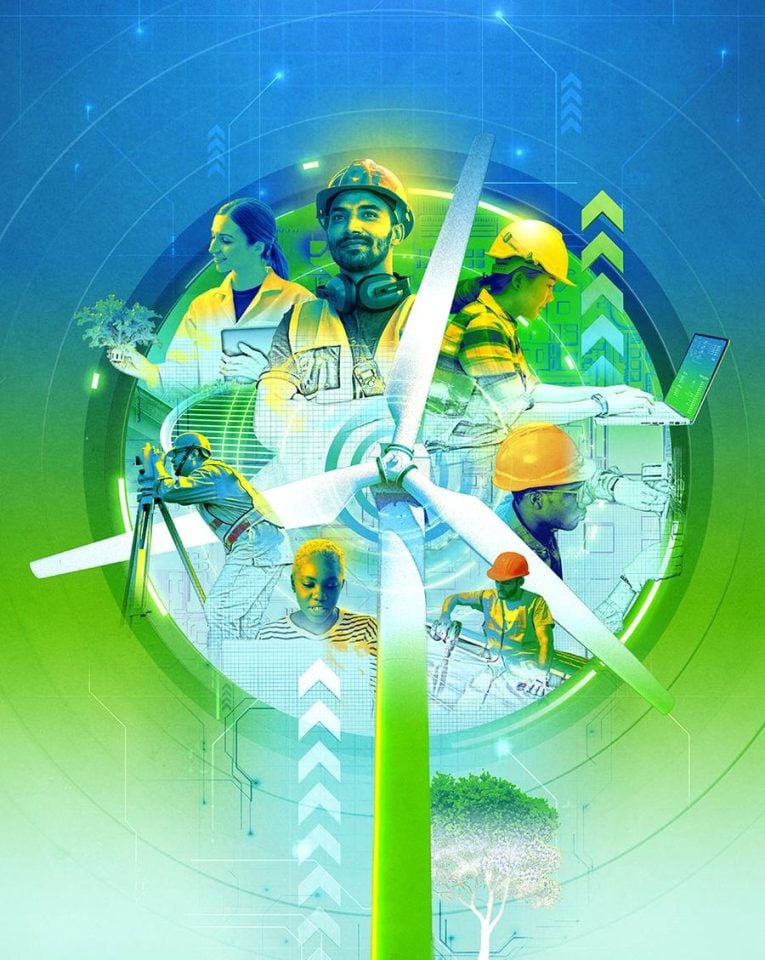
The idea that no alternative presented as a solution under the capitalist system to the problems created by that very system can be a genuine solution is proving itself with concrete examples in the field of so-called green/clean technology. The term green/clean technology is used to characterize technologies designed to be environmentally friendly from the production line to their use. This term also encompasses recycling. To control climate change, reduce pressure on natural resources, protect nature, and repair the damage done, it is necessary to shift towards models that phase out environmentally harmful production techniques, practices, and products. This, in turn, requires a transformation in every field – from energy production to industry, from agriculture to transportation. To move away from fossil fuels, which play a major role in global climate change, turning to clean energy sources and technologies such as wind, solar, hydroelectric, and geothermal power through planning focused on minimizing their negative environmental impacts plays a key role in this regard.
When considering the current level of technology and its potential, putting into practice technologies that would cause the least harm to nature and humanity is not at all difficult. However, the entirely profit-driven and anarchic nature of the capitalist mode of production constitutes a colossal obstacle to genuinely environmentally friendly and human-beneficial production. Precisely for this reason, phasing out fossil fuels before reserves are depleted contradicts the logic of capital, which has based its entire production infrastructure on these resources. Capitalist forces seek to increase their competitiveness by lowering energy costs. That is why they want to use all dirty energy sources –from coal to oil– to the very end. Despite alternatives being available, nearly 60% of energy production today still relies on fossil fuels (coal, natural gas, and a small amount of oil and petroleum derivatives). This ratio reaches 98% in the transportation sector.
Data show that, thanks to accelerated investments in recent years, electricity generated from solar and wind plants entirely met the new energy demand in the first nine months of 2025.[1]The fact that this sector is growing faster than the increase in electricity demand indicates that, if desired, the renewable energy transition could be completed in a very short time. Despite this, there is no significant decrease in fossil fuel-based electricity generation. Nor is a substantial decline observed in overall demand and production for oil, coal, and natural gas. Consequently, the rise in global carbon emissions continues. This is because the speed, scale, and model of the renewable energy transition are determined by financial capital, with its monopolies and financial institutions. For example, solar and wind energy projects in Asia and Africa are funded by these very financial institutions with much higher-interest loans, citing “high risk.” It is even reported that financing costs in Africa have risen by as much as five to six times, preventing numerous renewable energy projects from being realized.
On the other hand, while high costs and infrastructure problems are borne by the state –that is, passed on to workers through taxation– profits flow into the coffers of monopolies. In wind and solar-based electricity generation, large companies receive substantial subsidies from the state in the US, Europe, and Turkey alike. Moreover, despite the rapid decrease in costs due to the cheapening and proliferation of turbine and solar panel production, they demand that these high subsidies continue unchanged. When governments wish to reduce incentives, they face threats from these companies to halt production. In the end, the subsidies funneled by the state and the inflated bills end up being footed by workers.
All indicators point to the fact that, even if the energy transition accelerates, fossil fuels will maintain their place in the global energy system for a long time. Energy projections forecast that until 2050, nearly half of energy consumption will be met from fossil sources, while coal use will continue at high levels, especially in rapidly growing economies like China, India, and Indonesia.[2]Although coal’s share in electricity generation is decreasing, coal production and consumption hit a record high in 2024. Indian Prime Minister Modi celebrated his country’s 1 billion tons of coal production this year. While Trump continues his support for coal production, the US remains the third-largest coal producer after China and India. As is well known, Erdoğan has also been encouraging coal mining and coal-based thermal power plants for years, stating that they will use coal –which he describes as a domestic and national resource– to the very end. On top of all this, he boasts, “I am the greenest of all!”.
Fossil fuel monopolies have organized a vast disinformation network through their multi-million dollar lobbying activities against the renewable energy transition. While attempting to lend credibility to their lies and manipulative arguments through academia and the media, they also strengthen the political ground of politicians who approach global climate change with scepticism or deny it altogether. It is no coincidence that one of the common points defended by the rising global far-right is denialism in this field. As is well known, Trump, one of the strongest proponents of these reactionary policies, withdrew from the Paris Climate Agreement as soon as he came to power, turned towards fossil fuels instead of renewable energy, and signed decisions strengthening the coal sector. With the policy Trump pursued during his first presidency and continues to maintain today, the US has become the world’s largest producer of oil and natural gas. The American fossil fuel industry receives tens of billions of dollars in subsidies from the state each year. With this support directed at fossil fuels instead of clean energy, production in this field is not being constrained but is instead encouraged and increased.[3]Having increased its oil and gas production by 45% since 2016, the US is solely responsible for over 90% of the global net production increase. By constantly raising oil and natural gas exports and threatening to increase customs tariffs, Trump has forced Europe to buy US natural gas. During the latest White House meeting, a 20-year (totalling $43 billion) natural gas deal was also signed with Erdoğan.
On the other hand, it is incorrect to attribute European states’ greater turn towards green energy compared to the US to their higher environmental awareness. Europe does not have oil and natural gas like America does. Therefore, turning to renewable energy sources much more in this field is an economic necessity for Europe. But it does have coal, and following the energy crisis triggered by the Ukraine war, many European countries have decided to extend the lifespan of coal-fired power plants, reactivate closed ones, and increase existing production. Moreover, in Germany, it was the Social Democrat-Green coalition government, which was in power in the previous term, that signed off on this decision.
Similarly, the primary driving factor behind China’s massive investments in solar energy and battery technology for electric vehicles is not the threat of the world becoming uninhabitable due to global warming, but the motive to generate more profit. Indeed, despite appearing very green in this area, China, which has the highest carbon emissions, continues to meet 50% of its energy needs from coal.
Let’s give another example from Brazil, which hosted the COP30 conference. Brazil’s famous leftist president Lula da Silva emphasized at this conference that previous climate commitments must be fulfilled and that people must be placed at the centre of climate-related decisions. However, Lula’s statements, in which he displayed sensitivity by saying, “climate change is no longer a threat of the future but a tragedy of the present,” also contain a great hypocrisy, like all other bourgeois politicians. For Lula, like the others, continues uninterrupted incentives for fossil fuels and new oil drilling. Moreover, he tries to legitimize this by claiming that the revenue obtained will fund clean energy. The indigenous people, peasants, and workers trying to protect the Amazon voiced their opposition loudly during mass protest actions at the conference.
Capitalism’s “Green” Technology Shades Into “Black Gold”
It is not possible to say that products characterized as green/clean technology are genuinely “environmentally friendly,” especially when considering their production and end-of-use phases. When the primary motive is profit, even the cleanest energy sources can harm people and nature. For example, a clean energy source like water turns into an instrument of destruction when approached with the logic of building a hydroelectric plant (HPP) on every small stream. When agricultural products used for biofuels invade the areas where people’s essential food items are produced, it can lead to fatal consequences such as famine, depletion of water resources, and disruption of nature's balance. And when it comes to battery-technology electric vehicles, how threatening this harm can be will become more visible in the coming years.
Capital employs the production techniques and alternative resources characterized as green technology with a profit-oriented selectivity as well. Research and studies that would evaluate all potentials are not funded, or their timing is determined according to the interests of capital. In many fields, existing dirty production methods continue to be used not due to a necessity stemming from a lack of alternatives, but because of a preference for low cost/high profit. Therefore, although a large part of the environmental damage could be prevented, it is not. These considerations are highly valid for current electric vehicle technology as well.
The limited nature of reserves and the approaching end of oil's lifespan have made the transition to a new technology imperative for automobile monopolies, leading to a rapid shift towards battery electric vehicle production in recent years. The fact that these vehicles produce zero emissions stands out as a major environmental advantage. However, the additional electricity demand required to charge the batteries leads to increased operation of existing power plants and, if these are fossil fuel-based, to a consequent rise in carbon emissions. Furthermore, with the lifespan of these vehicle batteries being around ten years with current technology, it is inevitable that a massive waste problem will emerge in the coming years. The heavy metals used in current batteries have the potential to cause a major environmental problem.
The extraction and processing of rare earth elements (REEs) and critical minerals, which play a key role in many areas from batteries and electric vehicle motors to wind turbine motors, lead to numerous problems including serious water and soil pollution, as necessary precautions are not taken due to the drive for higher profits. Forests are also ruthlessly destroyed because of these mines.
REEs are usually found together with radioactive elements used as nuclear fuel, such as uranium and thorium. Because they exhibit similar chemical properties, separating them from these radioactive elements and from each other is quite difficult and requires the sequential application of many toxic substances. Extracting and separating these materials, which are not in the form of rich veins but are highly dispersed underground with very low concentrations, causes massive environmental devastation. For every ton of REEs extracted, approximately 2,000 tons of toxic solid waste, thousands of tons of toxic gases (sulphur dioxide and nitrogen oxides), over 75 tons of acid wastewater, and one ton of radioactive waste are produced.[4]The necessary measures to eliminate these without harming the environment are not fully implemented in order to avoid costs.
The ecological catastrophe caused by rare metal mines in Inner Mongolia region of China is one of the most striking examples of the extent of this devastation. A BBC team visiting the area described what they saw as “dystopian,” referring to the toxic waste lake extending as far as the eye can see just outside the Baotou and Bayan Obo regions, where hundreds of thousands of workers labour under heavy exploitation: “An artificial lake filled with toxic, sticky sludge – black, almost non-liquid, stretching into the distance.”[5] Cancer cases in the region are also very high.
Capitalist states focused on protecting the interests of capital are not only failing to try and prevent this destructive mining; they are also dismantling existing legal barriers. Under far-right governments, this is done much more recklessly. As will be recalled, the mass actions carried out by Serbian workers in the summer of 2024 brought this issue to global attention. The UK-Australian mining giant Rio Tinto, based on an agreement with the European Union, had moved to extract lithium in a 250-hectare area in Serbia’s Jadar Valley. Supporters of the project argued that the Jadar mine could meet 90% of Europe's current lithium needs and reduce dependence on lithium, which is critical for electric vehicle production and energy storage systems. However, tens of thousands of workers poured into the streets against this project, which was said to potentially make Rio Tinto one of the world’s largest lithium producers, launching the largest protests in Serbia’s history. As a result of the workers' days-long actions, during which they voiced concerns that the project could seriously harm ecosystems and pollute the waterways in the Jadar Valley, both the EU and the Serbian government gave assurances with statements that “environmental standards would be paramount.” However, the assurances of bourgeois rulers and companies have no reality in practice. Just as capital, which views everything as a resource to be exploited, cannot refrain from exploiting labour, it cannot refrain from plundering and destroying nature. We know very well many terrible examples of this destruction from Turkey and from events in other parts of the world. Furthermore, these days, the fascist Milei has also moved to remove obstacles to the unrestricted opening of lithium and copper mines, and therefore similar dangers await Argentina.
Looking at the “green projects” developed in the name of “sustainable agriculture,” we encounter the same systemic problems and dilemmas. For example, the “European Green Deal,” which the European Union announced it would implement by 2030, is facing backlash from farmers in many countries. Farmers oppose this agreement, which limits the use of pesticides and chemical fertilizers, mandates that a certain portion of agricultural land be allocated to organic farming, requires fallowing and crop rotation to protect soil, restricts water use, and demands necessary transformations to reduce greenhouse gas emissions from agriculture, on the grounds that it will increase costs to an unbearable extent. This is because the EU is simultaneously cutting agricultural subsidies and limiting funds. This situation means an even greater acceleration in the destruction of small and medium-sized farms. The reactions against this are largely being attempted to be organized by fascist movements. Fascists such as the AfD in Germany, Le Pen in France, and Orbán in Hungary are appearing alongside farmers in protests, trying to turn farmers into their own breeding grounds by exploiting the rising discontent, just as the Nazis did after the 1929 crisis.
The lies of green employment, dreams of peace
At bourgeois summits, it is also frequently emphasized that steps to be taken against climate change should be considered alongside the goal of “creating employment and reducing inequalities.” As is known, during the pandemic period, Biden’s biggest promise in the US was that investments in green energy would create a major increase in employment in this field. However, the shift towards “green” neither cured unemployment as claimed nor provided a lasting economic revival. The employment created in new areas in no way compensated for job losses in traditional industries. For example, today, due to both the crisis and the transition to electric vehicles, mass layoffs are occurring worldwide in the automotive sector. While traditional production lines are being shut down, electric vehicle production requires far fewer workers. Similar situations largely apply to other sectors as well. Because new technologies require far fewer workers.
Although unemployment is one of the chronic problems of capitalism, fascist movements do not hesitate to manipulate and exploit this as well. They portray unemployment as a product of policies and practices they see as contrary to their own interests, attempting to expand their base through rising discontent.
As for the dreams that green technology would strengthen peace policies by eliminating dependence on oil and natural gas and by removing the climate crisis, which “triggers wars and migrations,” the ongoing imperialist competition over REEs and critical minerals has already shattered these illusions to pieces. In this context, there is a fierce competitive war being waged, especially between China and the US. Moreover, in order to develop access to these elements, Trump, among others, is exerting pressure on numerous countries through threats of military intervention in addition to blackmail. We are rapidly moving towards the shaping of new fronts of a Third World War through the intensifying competition in this area.
All of this shows that as long as capitalism, based on the logic of production for profit, is not overthrown, no solution can be found to any of the problems we face; on the contrary, every alternative presented as a solution will leave humanity confronting new problems.
link: İlkay Meriç, Clean Technology Under Dirty Capitalism?, 8 December 2025, https://en.marksist.net/node/8663