





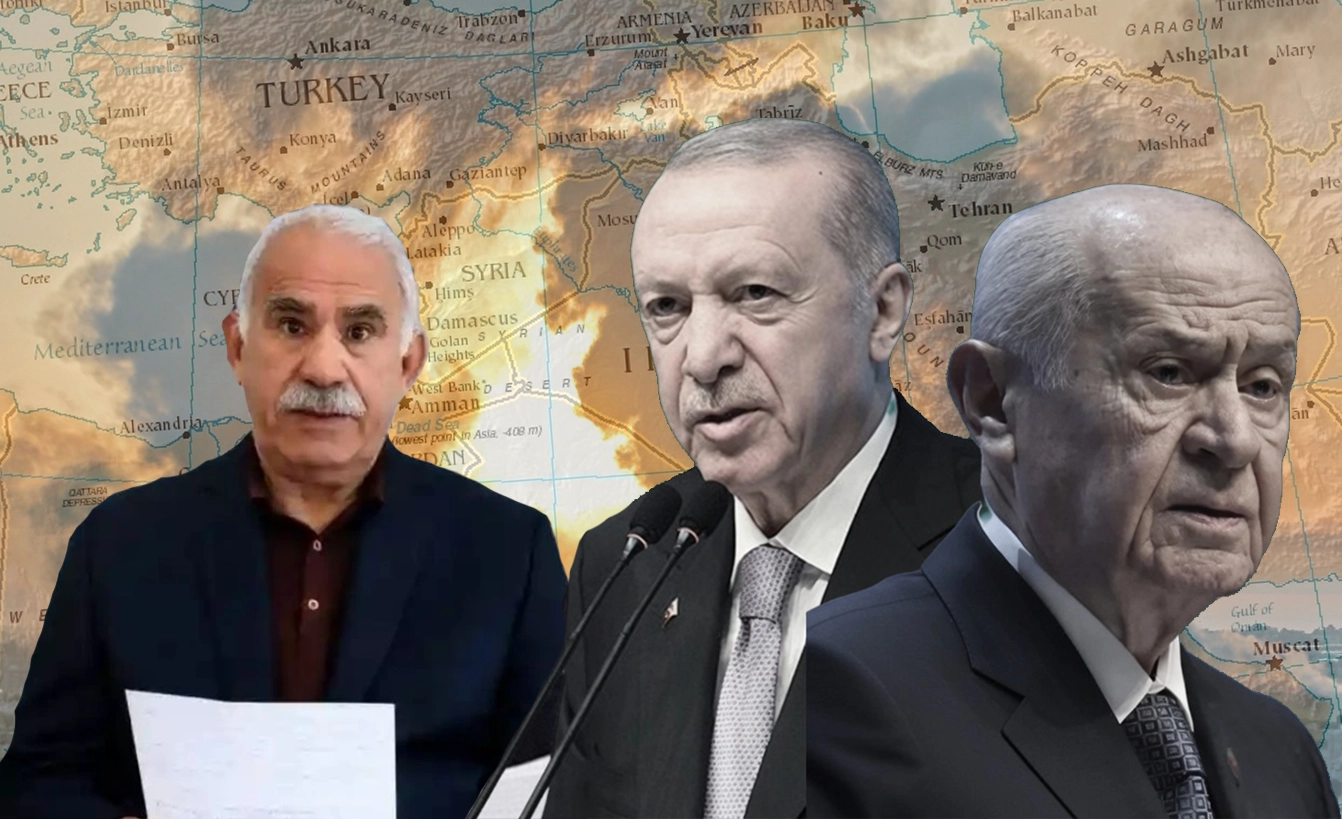
Dubbed a “framework law” and formally titled the Law on Strengthening National Solidarity and Social Integration, the legislation was published in the Official Gazette on 18 August and entered into force. The law provides for the deferral of sentences –for a period of five to ten years, under certain conditions– in investigations, ongoing trials and finalised convictions relating to offences connected with organisations under the PKK/KCK umbrella. As might be expected, it has triggered intense debate. Although parties and deputies from across the political spectrum in parliament gave the bill what might be called exceptional support –roughly 80 per cent– the controversy shows no sign of abating. The fascist government bloc, which is the law’s principal architect, and the Kurdish political movement, seen as the initiative’s partner, do not even appear to have been satisfied by this level of backing. Minor fascist parties that voted against have been given a fairly free pass, whereas the New Party –whose leadership backed the bill even as most of its MPs dissented– along with extra-parliamentary socialist groups and the intelligentsia at large, have been subjected to a torrent of criticism precisely because they did not fall into line.
Both the government bloc and the Kurdish movement’s representatives in the process have been proclaiming, in remarkably similar terms, that a major turning point in the country’s history is at hand, and insist that everyone should throw their weight behind the law and the process as a whole. For our part, as Marksist Tutum, we have made it clear that we refuse to be trapped in the yes/no dichotomy imposed by the regime’s stakeholders and the Kurdish political leadership. Arguing that the so-called “framework law” is in fact part and parcel of a plan that has long been in motion, we have stressed that the real issue is not the law itself but the very nature of this process. For this process –shaped as it is by the regime’s survival calculations and imperial desires– has not, contrary to what is claimed, been designed to deliver peace, democracy or a resolution to the Kurdish question, nor is it being conducted with any such ends in mind.
It should be stated from the outset that, from a Marxist standpoint, the point of opposition is not the PKK’s decision to end its armed struggle. Marxists are in no position to lecture a national liberation movement on whether it should pursue its politics through armed or unarmed means – that decision belongs to the Kurdish political movement’s own will and choice. In any case, the crux of the matter lies less in what the Kurdish political movement does or does not do, and far more in what the fascist regime that prevails in Turkey is doing and intends to do. This, fundamentally, is the determining factor for class revolutionaries who assess concrete developments on the basis of the interests of the working class and the labouring masses, both in Turkey and across the region – and it is precisely this perspective that shaped our stance on the framework law, as we set out in our earlier piece:
“Class revolutionaries who for years have persevered through immense hardships in their struggle against chauvinism and anti-Kurdish hostility stand today, as they did yesterday, in favour of: the recognition of all democratic rights of the Kurdish people; the immediate release of all political prisoners who have been branded as ‘terrorists’; an immediate end to the dirty and unjust war being waged; and an end to discriminatory practices. Moreover, class revolutionaries advocate, as a general method in the context of the national question, a resolution of the problem on the basis of democratic politics – for it is the poor and the working people on both sides who pay the heaviest price for war. We stand for a democratic, just and peaceful resolution to the Kurdish question, in line with the will and wishes of the majority of the Kurdish people. And we maintain that the right to determine the content of that resolution lies solely with that same majority.”[1]
The “process” of which the framework law is both a part and a step, is, on the one hand, an element of the Turkish bourgeoisie’s reactionary policies –pursued in its capacity as a sub-imperialist regional power– aimed at securing a share in the exploitation of the region’s peoples and adding new links to the chain of oppression bearing down upon them. On the other hand, this process is part and parcel of the incumbent regime’s efforts to consolidate itself and ensure its own survival in the face of a multi-faceted crisis. This is a regime that, to say nothing of socialists, workers, labouring people and Kurds, does not even grant the bourgeois opposition the right to exist, let alone a respite from persecution. It is upon these two fundamental pillars, then, that the so-called “process” rests for the regime: on the one side, expansionism driven by a militarist-imperialist appetite; on the other, the prolongation of the fascist government’s own political life.
The underlying reactionary foundation is also what explains why the entire process has been conducted behind closed doors, in secretive fashion; why the law that eventually emerged –after all the fanfare– turned out to be nothing more than a limited and conditional sentencing deferral (in other words, a classic case of much ado about nothing); and why, consequently, broad sections of society, including the Kurdish masses, have failed to muster any real enthusiasm. One could hardly have expected peace, democracy or a resolution to the Kurdish question to spring from a process that has been conceived and run by the ruling power for militarist, expansionist and fascist ends.
The nature of the process
The process that was first brought onto the agenda by the ruling bloc some two years ago, and has been debated ever since, is at its deepest level a consequence and a component of the large-scale transformations that began on a global scale from the 1990s onwards. With the collapse of the Soviet Union and the onset, not long after, of capitalism’s profound historical crisis, geopolitical fault lines across the world were set in motion. A re-division of the world among the imperialist-capitalist powers had begun. This re-division, though fluctuating in its course, has generally traced an upward curve in tension and, despite differing in certain respects from previous ones, amounts to a new world war. Today, this process of re-division and world war continues. Century-old balances are being upended; regimes are changing; borders are being redrawn; historical alliances are breaking apart; alignments of power are shifting; capitalist powers of every size are taking positions accordingly, making moves to the extent of their economic and geopolitical capacity, entering into new alliances and blocs, and so on.
US imperialism, which set this entire war process in motion and has been its most active instigator at almost every stage and in every theatre, has the specific aim of reconfiguring the Middle East. Within the framework of the plans that the US (and Israel) have set in motion to redesign the region, the objectives include: the absolute guarantee of Israel’s security and survival, together with the removal of obstacles to its expansionist prospects; the liquidation of the Baathist or Baath-inflected regimes inherited from the past; the breaking and eventual elimination of Iran’s influence in the region, and the overthrow of the Mullah regime in Iran itself; the curbing of Russian influence in the region; and, underpinning all of this, the restructuring of the region on the basis of capitalism’s new needs – as a source of raw materials, a market, an investment zone, and a corridor for logistics and energy transit. In subsequent years, a further aim has been added to this list: bringing China’s access to the region’s resources under control, and preventing it from building a sphere of influence there as an emergent imperialist great power.
That is why the imperialist US aggression that began with the attack on Iraq in 1991, and was later escalated to a second phase with a fresh assault and occupation in 2003, constituted a series of wars waged to implement the plan known as the Greater Middle East Project. One of the key moments in this series of wars and conflicts in the Greater Middle East –encompassing the Caucasus, northern and north-eastern Africa, and a belt stretching into central Asia– was the process that began in the final days of 2011 and came to be known as the Arab Spring. The mass uprisings that broke out in various countries across the region had the effect of a major earthquake. Military dictatorships fell in a number of Arab states; in the cases of Libya and Syria, however, the process morphed into a full-scale war in which the imperialist war took on the appearance of “civil war”.
In Syria, a country of diverse ethnic and religious communities, the Kurdish population –which had been subjected to repression since the establishment of the Baath regime, and whose very existence was denied– became one of the organised and armed forces involved in this process. The imperialist war, waged under the guise of a “civil war” in Syria, opened the way for Syrian Kurds to establish a de facto state structure in the territories encompassing their living spaces in the north of the country, enabling them to preserve their identity and govern themselves. The emergence of a new zone of Kurdish control, this time on Syria’s border with Turkey –following a similar development in Iraq– was, as expected, a source of profound anxiety for the Turkish state, setting off all its alarm bells.
On the other hand, the Turkish bourgeoisie, as a natural consequence of the sub-imperialist level it has attained, aspires to wield effective influence in the region. The desire to secure the maximum possible share of the spoils from a process that entails the shaking of established balances, the changing of regimes and borders, and to establish supremacy over regional rivals, constitutes a motive for the Turkish bourgeoisie’s conduct that is at least as powerful as its fear of the Kurds. Interpreting the deep seismic and bloody developments in the region in terms of a calculus of “risks and opportunities”, the bourgeoisie has pursued a risky policy that has at times landed it in serious crises – as may be recalled from the stand-offs with Russia and the United States in the Syrian context.
The ruling power, which evolved into a fascist regime after 2015, has viewed this process as risky not only for the state but also for its own survival. It is on this ground that the new Kurdish opening launched by the regime forces in the conjuncture of their dire straits, in order to neutralise risks and capitalise on opportunities, rests. Officially, the new Kurdish opening appears to have been initiated by Bahçeli’s gesture at the parliamentary opening session two years ago and his subsequent statements; at its core, however, it hinges on the Kurdish movement, both domestically and externally, making an alliance with the state in coordinated or joint action. For this to happen, the Kurdish national movement is required to lay aside, to a significant degree, the historical demands it has upheld for decades, and to lay down its arms. In the early days of the process two years ago, when things were still far from clear, we made an assessment in which we succinctly set out the basic elements of this process:
“An imperialist world war is being waged in its own style and the reshaping of the ground in the Middle East, one of the most important fronts of this war. Although this is the case, trying to reduce these new initiatives of the regime to Erdoğan’s personal power calculations is a misleading and narrow perspective. With this initiative, the regime is trying to carve out a path for itself in the region, which is in flames, and also wants to maintain its existence with new constitutional arrangements.”
“In summary, it would not be wrong to think that the regime is in an effort to reposition itself in the light of the new process in the region and that it is seeking some reconciliation with the Kurdish movement within this framework. However, it is also clear that in this search the regime tends to give as little as possible to the interlocutor, but to take it for itself. This explains the problematic way in which such an initiative, which is already highly contradictory in nature, has been launched.”
“There is no doubt that the aim of the government is to (at least partially) win over or pacify the Kurdish masses and the Kurdish movement. In the statements made in this process, especially by Erdoğan, the “internal front” is emphasised as a key concept. In other words, the fascist government needs more than the current composition of the alliance with regard to the developments it is planning. What do they expect? It is not difficult to see that there are two main points. The first is the situation created by the development of the war in the Middle East, especially in the last year, and the second is the changes that need to be made in order to maintain the regime under the leadership of Erdoğan by further consolidating it constitutionally.”[2]
It is now plainly evident that many points which were unclear at the outset of the process have since gained clarity among the parties. The situation in Syria was the main trigger that set the entire process in motion. Initially, the positions secured by the Kurdish movement in Syria, combined with the strong backing they received from the United States, gave them a considerably stronger hand in the balance of power with the Turkish state than is currently the case. The essence of the entire range of problems between the Kurdish movement and the Turkish state –particularly in the context of Rojava, with its fluctuating moments of tension and détente– was tied to the question of how to establish a share and a balance within the partnership that would be conducted as the region was redesigned according to US-centred plans. However, the fall of Assad, the rise to power of the HTS forces under Colani (al-Shara) –who have received active Turkish support and cooperation– along with the US scaling back its support for the Kurdish movement in the subsequent period and moving closer to Turkey’s positions, has significantly altered the balance. Once Washington’s oscillating policy became clearer in a direction unfavourable to the Kurds, it became apparent that the Kurdish movement’s bargaining power vis-à-vis the Turkish state had weakened.
This is the significant factor underlying the acceleration of the process –which for two years had been conducted in a stalling manner– both in Syria and in Turkey, in addition to the US-Israeli initiation of war against Iran. As a result, the state in general and the fascist government in particular have found themselves with a strengthened hand vis-à-vis the Kurdish movement, and have come to feel more confident and secure. The recent dissolution of the SDF in Syria and the completion of the integration process have further consolidated this. Finally, the approaching election date in Turkey, together with developments in the CHP that have begun to take on unforeseen dimensions from the regime’s perspective, can also be counted among the factors affecting the timing.
The ruling bloc officially calls the project a “Terror-Free Turkey” and presents it as such in all its propaganda, while the Kurdish movement refers to it as the “Peace and Democratic Society Project”. Yet it must be clearly emphasised that this project has nothing to do with peace or democracy. Nor does it have any bearing on a settlement based on meeting the democratic demands of the Kurdish people.
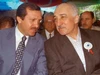
As to what the project really means in essence, there is perhaps little need for lengthy, in-depth analyses or elaborate evidence. For quite striking statements have been made by Öcalan himself. Even setting aside other matters, two messages he is said to have conveyed during the latest delegation meeting are particularly noteworthy. Öcalan says: “We will be as solid a pillar of this state as the MHP.” This is striking from a figure who, for years, has both criticised Marxism by declaring that the state is a bad thing, and preached to the Kurds not statehood but what he calls “confederal communalism” – something he has posited as the very opposite of the state. Yet now he speaks of being a partner to the state. Moreover, he says “this state” – not some future or reformed one. It is well known that the issue of a new constitution has long been raised by the current fascist government, and that it has periodically sought to build consent by placing it on the agenda. In this context, Öcalan adds: “First the law, then a new constitution, and then the election process” – thereby underscoring that a concrete plan with politically predetermined stages is being pursued. Thus, we understand that, while the great majority of society expects and demands elections, a new constitution is being planned before a new election takes place.
The regime’s imperial plans
While the war against Iran brings with it certain expectations and compulsions vis-à-vis Turkey from the US perspective, the regime has in turn become more extensively involved in Washington’s regional plans, with the aim of using this to its own advantage and in pursuit of its own imperialist ambitions. This should be considered not only in the context of the Arab-Persian-Kurdish geography, but across a broader expanse stretching from Ukraine to the Caucasus. Turkey has increasingly tilted towards the US and the West in the ongoing war in Ukraine, and in the Caucasus it has made openly pivotal moves against Russia, in tandem with the United States.
It is evident that the hostility towards Iran and Shia Islam, which constitutes a fundamental dimension of US imperialism and Israel’s plans for the region, is also shared by the fascist regime in Turkey. It should not escape notice that the recent Mecca Alliance has precisely this as its specific target. Even if not directly targeting Iran itself, it is not difficult to see that the alliance’s immediate targets include Hezbollah, the Houthis, and others who act as carriers of Iranian influence in the region. The reactionary Saudi monarchy, anticipated to be the main financial backer of the alliance, is particularly in need of Turkey’s military support in this regard. In the period ahead, under the pretext that the region’s major trade routes are under threat, it would surprise no one if Turkey were to become involved in the conflicts there.
It must be firmly emphasised here that interpretations suggesting that the Mecca Alliance has a basis or direction contrary to US and Israeli plans for the region are groundless. In order to make this alliance acceptable to the public, the regime’s spokespersons and ideological manipulators in Turkey attempt to downplay the anti-Iran and anti-Shia dimension as much as possible, while pushing a fake anti-Israel rhetoric to the forefront. The regime, which pretends not to see Washington’s statements that warmly endorse the Mecca Alliance as perfectly compatible with US interests –and which, moreover, conceals the fact that the framework of this alliance was most likely shaped and encouraged by the United States– is trying to peddle the lie that the US would ever countenance an anti-Israel alliance.
This alliance is merely one of the manifestations, in the Middle East, of the general approach of the Trump-era US to devolve certain matters to regional powers. Just as Trump pressures Europe by saying “you need to put more skin in the game”, here too he is effectively saying: “I and Israel should not be the only ones dealing with Iran; you, as my allies in the region, must also shoulder some of the burden.” Of course, in all cases the framework and limits are drawn by US imperialism, and the arms are largely purchased from it. In this way, Iran is to be encircled, including by regional powers.
The members of the Mecca Alliance, like Israel, are US allies in the region. It would be absurd, of course, to expect their interests to overlap completely on every issue. There are disagreements among them on many matters. What matters, however, is that these forces, under US patronage, conform to the main framework of the plan drawn up by the United States and the pro-Israel lobby. Hostility towards Iran; the elimination of Iran’s regional proxies – such as the Houthis, Hezbollah in Lebanon, and various formations in Iraq; opposition to radical Islamist movements in certain respects; the region’s capitalist transformation in line with the interests of the US and the West... Disagreements on various issues falling outside these objectives are possible and natural. Within these limits, there are, of course, frictions and disagreements between Turkey and Israel as well – over questions such as who will wield greater influence in Syria, and how Syria’s reconstruction will be carried out. On these matters, frictions and mutual jostling are to be expected.
The US wants disagreements among its allies to be kept within certain limits, and pursues its policies accordingly. Indeed, the situation of the Kurdish movement in Syria and Turkey’s position are themselves an example of the effectiveness of the US umbrella. Both Turkey and the Kurdish movement in Syria were US allies. Yet there were profound contradictions between them in terms of aims and objectives. A fundamental dimension of the process initiated by the regime in Turkey was precisely to resolve these contradictions. Both sides made efforts to win the US over to their respective specific policies. In the end, following this contest, the US’s allies were essentially brought to a point closer to Turkey’s demands.
It is plainly evident that the alliance being constructed in the region against Iran and its allied forces has essentially been framed as a Sunni sectarian axis bringing together Turks, Arabs and Kurds. It is no coincidence that Erdoğan has recently made this very point in various speeches, emphasising a Turkish-Arab-Kurdish alliance. This is a sectarian regional alignment. The ongoing process of rapprochement between the Kurdish movement and the Turkish state at the regional level constitutes a significant component here. It is also striking that Öcalan has referred to Iran as a “Shia power”[3] – a designation the Kurdish movement had not previously used for the reactionary dictatorship in Iran, and had not framed in sectarian terms.
The discourse employed in the effort to conceal the essence of the regime’s imperial policy continually invokes the themes of peace and stability, and declares Turkey to be a consistent executor of these principles in the region. It is even frequently emphasised that no expansionist ambitions are entertained. Yet, despite all this exertion, countless statements cannot help but betray these imperial desires.
For instance, Erdoğan, in a threatening tone, declares: “Let friend and foe alike know and understand this” – emphasising that history is being rewritten in the region, and that Turkey is the one shaping this process, concluding with “no one can block this.” It is patently clear that to claim that Turkey is the power shaping the rewriting of history in a region as central to the world as the Middle East, and that no one can prevent it, is an imperial boast.
Bahçeli, in a lengthy interview evaluating the current state of affairs (18 August 2026), has also articulated the imperial perspective, albeit in a different register and within his own discourse: “It should be noted that Turkey is situated at the intersection of energy, transport and trade corridors between Asia and Europe. The success of strategic projects such as the Middle Corridor, the Development Road project, the Turan Corridor and energy transmission lines depends, to a large extent, on an atmosphere of security and stability. A Terror-Free Turkey will contribute to the more effective implementation of these projects.” Of course, when it comes to energy, Turkey’s interest is not limited to transmission lines. Having assumed the role of protector over Iraqi Kurdistan and Syrian Kurdistan, Turkey has long taken a close interest in the oil resources there as well. It has become so thoroughly consumed by its thirst for oil that it is prepared to engage in the illegal sale and transfer of Iraqi oil, and even to sell it to Israel – a country it propagandises as an enemy.
While Erdoğan and Bahçeli deliver their messages –of which there are many other examples– the owners of capital are also voicing their own plans and projects for the new era. For instance, Toygar Narbay, Chairman of the Turkish Garment Manufacturers’ Association (TGSD), has proposed the creation of a new production-oriented economic zone on the Syrian border, and does not shy away from fleshing this out with calculations that appear to have been carefully thought through: “We aim to establish a new production-oriented economic zone along approximately 444 kilometres of border and a depth of 30 kilometres. Our proposal is to lease, on a long-term basis, roughly 15 kilometres of the Syrian side. The zone would be administered by the Turkish government, with security under the control of the Turkish military. The migrant population in the region could also be employed there.” It appears that the garment capital, which has already begun relocating to Egypt –complaining bitterly about high labour costs in Turkey– is still not satisfied, and now harbours ambitions to turn Syria’s north, effectively reduced to a colony, into labour camps resembling open-air prisons.
In conclusion, neither the Greater Middle East plans –in which the US and Israel occupy centre stage– nor the militarist expansionist plans of the Turkish state and its bourgeoisie, which amount to a kind of adaptation to the Greater Middle East plans, or rather an articulation into them on their own specific terms in certain respects, can bring peace, democracy or prosperity to the peoples of the region. Millions of impoverished working people have already experienced the bitter consequences of the bloody implementation of these plans. Those who have lost their lives, whose homes have been razed to the ground, who have been forced to migrate from their ancestral lands, who have been pushed even deeper into destitution – these millions speak clearly enough. What will disrupt these imperialist, militarist and expansionist plans, and what will bring peace, democracy and prosperity to the region, is the revolutionary struggle that the working people will wage on the basis of their own independent class interests.
[1] Rejimin Dayattığı Oyunu Reddediyoruz, 15 Ağustos 2026, https://marksist.net/node/8816
[2] Levent Toprak, Debates of New Opening and the Kurdish Question, 4 November 2024, https://en.marksist.net/node/8373
[3] Öcalan’s words are as follows: “Iran cannot be left as it is. Just as Syria was living its final period, this Shia power is also living its final period. A move must be launched that includes Neçirvan [Barzani] and Bafıl [Talabani], and that will also transform PJAK.”
link: Levent Toprak, A “Process” Shaped by the Regime’s Survival Calculations and Imperial Desires, 3 September 2026, https://en.marksist.net/node/8827