





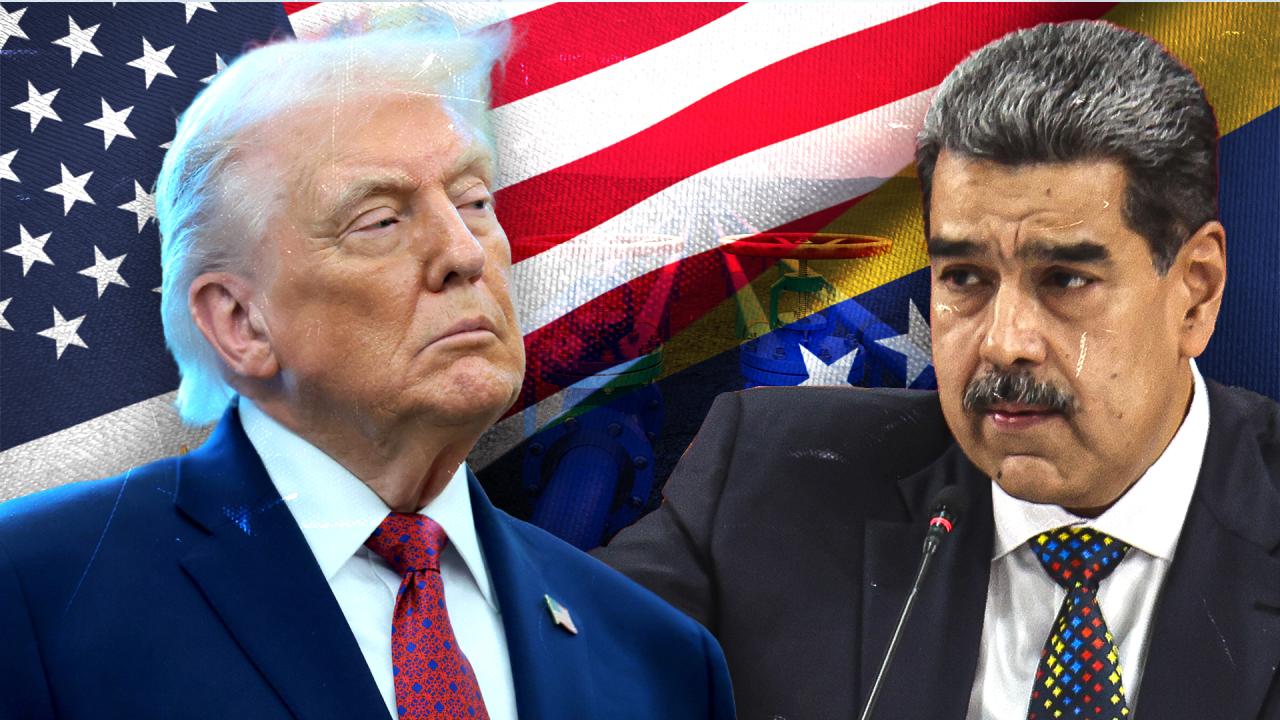
While U.S. threats and assaults against Venezuela have persisted for months, the midnight abduction of President Maduro and his wife on January 3, and their removal from the country, marked a new threshold in imperialist banditry. Reinforced by Trump’s statements, this act demonstrates that capitalism has abandoned even the rhetorical remnants of international law, national sovereignty, the peoples’ democratic choice, and similar pretenses. The historical crisis and impasse we have long emphasized had already dragged capitalism’s “norms” into a vortex of destruction. As Trump’s rhetoric and actions reveal, not only is there no veil left to conceal the disgrace now exposed, but there is no longer any perceived need for one.
As is well known, Trump declared the Maduro administration a narco-terrorist regime and last summer launched a major blockade campaign against Venezuela. The United States shifted 20 percent of its navy to the Caribbean and simultaneously imposed an air blockade. Seizing Venezuela’s oil-laden ships while en route, and bombing numerous vessels under the allegation of drug trafficking, the U.S. also confiscated a Venezuelan state-owned oil company operating within the United States. While Venezuela was being pressured under this blockade, efforts were made to persuade Maduro to resign and leave the country. Following these threats, Maduro was subjected to a military raid, forcibly taken from his location, and transferred to the United States. It has been announced that Maduro will stand trial there, facing a pre-drafted indictment that accuses him of “narco-terrorism, cocaine trafficking, and possession of machine guns and destructive devices against the United States.”
Trump, with great zeal, announced that Maduro had been “captured,” declaring: “We do not want to relive the situations we have experienced in recent years. Until a safe, proper, and prudent transition is achieved, we will govern Venezuela.” In doing so, he did not hesitate to proclaim who would decide the country’s future. Trump’s reckless statements did not stop there; he further declared that Venezuela’s oil[1] would be placed at the disposal of U.S. companies, and that oil revenues would be used “to compensate Venezuelans harmed under Maduro’s rule and to cover the losses of the United States.” We know all too well from the example of Iraq how oil revenues, following occupation, were plundered for decades through privileged contracts granted to American oil companies and sanctions disguised as war reparations. The same example also shows that the Iraqi people, allegedly “harmed under Saddam’s rule,” received nothing at all from these revenues.
Nobel laureate opposition “leader” Maria Corina Machado, in a speech at the American Business Forum some time ago, stated that Venezuela’s $1.7 trillion worth of oil, natural gas, gold, and other mineral resources would be privatized, presenting this as a lucrative opportunity for U.S. companies. The appeals of Venezuelan oligarchs –historically tied to American monopolies and thus to the U.S. administration representing them– now appear to have finally found a response. Trump also announced that military forces would be deployed to Venezuela to secure oil supplies. We know from the National Security Strategy document released by the Trump administration that this military deployment is not directed solely at Venezuela, but targets a broader region regarded by the United States as its backyard.
“After years of neglect, the United States will once again defend and enforce the Monroe Doctrine in order to reestablish American supremacy in the Western Hemisphere… We will not allow extra-hemispheric rivals to deploy forces or other threatening capabilities in our Hemisphere, nor to possess or control strategically vital assets,” the document declares. It further states that U.S. military presence in the region must be reorganized “to confront urgent threats.” Indeed, the military plan directed at Venezuela finds its expression in the document’s assertion that “targeted deployments must be carried out to secure the border and defeat the cartels.”
Exploiting as a pretext what it claims to be “mass migration, narco-terrorists, cartels, and other international criminal organizations” threatening the United States, the Trump administration in reality seeks to bring Latin America—viewed as its “backyard”—entirely under U.S. hegemony. As reflected in the strategy document, the objective is to break the influence of Russia and China in the region. In particular, it laments that China has placed the United States at an economic disadvantage and has significantly penetrated the region, stating: “Allowing these assaults without serious resistance constitutes yet another major American strategic mistake of recent decades. The United States must hold the preeminent position in the Western Hemisphere for our security and prosperity…” “…We want a Hemisphere that cooperates with us; a Hemisphere free from hostile foreign interventions or the seizure of key assets; a Hemisphere that supports critical supply chains; and a Hemisphere that ensures our continued access to key strategic locations.”
For this reason, Trump provides every form of support to fascist forces in order to bring to power governments across Latin America that maintain close cooperation with the United States. As a result of these efforts, the international fascist network seeks to spread its campaign of seizing power throughout the continent, beginning in Argentina and continuing in Chile, Bolivia, and Honduras. In these cases, the pro-American changes of government were carried out through “elections.” In Venezuela, however, it is now being pursued by force.
One of the significant aspects of this imperialist banditry is that the United States openly delivers a message of threat and intimidation to the entire world. Indeed, on the very first day, Trump emphasized in his statement that this was a warning to anyone who might challenge U.S. dominance. In short, Trump seeks to declare that U.S. imperialism, in its new war of redivision, can crush all forces that hinder its interests. While the message ultimately targets the main rivals in the broader imperialist confrontation –above all China, which is regarded as the chief threat– it is conveyed first and most directly to Latin American countries that do not align with the United States. Colombia, which in recent years had drawn closer to Venezuela and drifted away from the U.S. orbit, as well as Mexico, the vast neighbour on America’s southern border, have become targets of Trump’s Hitler-like aggressive rhetoric. Cuba scarcely needs to be mentioned. Nor are the countries openly threatened limited to Latin America. Iran, Greenland, Panama, Somalia, Nigeria – the list is long enough. Trump and his fascistic entourage, intoxicated by their sense of triumph, spew their venom in all directions.
As emphasized by Elif Çağlı, “Under the dictatorship of Trump, the US’s attempts to assert its hegemony have plunged the world into an extremely uncertain and utterly chaotic period. Some writers define this era as unique to Trump’s leadership. However, saying «this is Trump’s era» creates an expectation of transience. Trump is precisely the dictator suited to this rotten phase of capitalism. In the role of Big Brother, he seeks to shape the world. Like Hitler in Charlie Chaplin’s The Great Dictator, he plays with the world as he pleases. (…) The type of state leaders we were accustomed to in the past –those who came and went through elections, sensitive to bourgeois law and the reactions of the masses– are now a thing of the past. Our time is the era of dictators who boast, «I did it, and it’s done.»”[2]
It must be clearly recognized that this banditry constitutes the latest link in the wave of aggression that began with the massacre targeting Gaza-Palestine. With the Gaza assault –transformed into genocide– the new act in the world war has been further expanded through this banditry. Gaza, Syria, Lebanon, Yemen, Iran, and now Venezuela… Each of these battlefields carries its own specificities, its own power relations and balances, yet all are situated within the context of a single process. Our longstanding analyses and remarks regarding the historical crisis of capitalism and the world war are being confirmed time and again.
The Working Class Trapped Between U.S. Aggression and the Corrupt Bolivarian Regime
In Venezuela –bombed and with its president abducted– there is as yet no significant reaction against the United States from the government, the military, or the masses. The only meaningful explanation for the fact that Maduro could be abducted without encountering serious resistance is that within the state and the army there were those who, in agreement with the U.S., betrayed him. Yet the scope and extent of this remain unclear. In the coming days, the situation will become clearer. The Bolivarian regime had until now managed to fend off all pro-American coup attempts. But the decaying and disintegrating regime could not even prevent Maduro’s abduction by the United States.
The broad masses of workers, who experienced severe impoverishment and confronted rampant corruption during Maduro’s tenure, will not see their conditions of misery alleviated unless they gather strength and engage in organized struggle. The greatest reality of Venezuela’s last 25 years has been the absence of revolutionary class organizations that could lead the workers –who rose up in the early 2000s against yet another pro-American coup– with the perspective of establishing a revolutionary workers’ power. Chávez, who led the massive anger and rebellion of the working masses, essentially represented a bourgeois populist left outlook. He came to power by raising the banner against the corrupt traditional pro-American Venezuelan oligarchy, and through a false socialism discourse that has nothing to do with workers’ socialism, he gradually dissipated the revolutionary energy of the masses over the years. Although certain bourgeois populist left reforms that brought relative improvements to the living conditions of the poorest workers generated sympathy, over time the situation of Venezuelan workers generally worsened. His successor, Maduro –an even worse version– embodied the increasing corruption of the Bolivarian bourgeoisie in power. As a result, the support of the working masses for the Bolivarian regime has diminished drastically, while their discontent has grown.
The Bolivarian regime created its own bourgeoisie and, in order to survive, clung to the military, economic, and political support of Russian and Chinese imperialism. The Bolivarian bourgeoisie and bureaucracy, leaving untouched the monopolistic capital that sabotaged the economy and drove workers into misery, devoted themselves to expanding the machinery of corruption and filling their purses. The regime forces, having gradually weakened the social programs that once used oil revenues in favour of the poor, came to view the working masses merely as a stick to be wielded in the face of major threats, while strangling workers’ and labourers’ initiative entirely in both the economy and politics. Even in workplaces that had to be nationalized as a result of occupations, the Bolivarian government denied workers any right of management and control, and strikes were forcibly suppressed. Ultimately, the workers have been trapped between the coup plots of U.S. imperialism and the corrupt Bolivarian bourgeois regime.
As Marksist Tutum we argued from the very beginning that the Chavista bourgeois left line –marketed as “21st-century socialism”– could not provide a way out for the working masses. We also emphasized that this line could not protect the country from U.S. aggression. We stated that the only path to fighting back against U.S. imperialism lies in transcending capitalism through the revolutionary initiative of the working class and securing the support of the international proletariat. The vital importance of these truths has, unfortunately, been demonstrated time and again through bitter lessons. Today, the way to halt the aggressiveness of American imperialism is certainly not through offering support to the Maduro regime in one form or another, but through raising a working-class-based response both in Venezuela and on a global scale.
[1] In Venezuela, whose exports rely on crude oil, the petroleum sector –previously dominated by U.S. monopolies– was nationalized in the 1970s. Following Chávez’s rise to power, the Bolivarian Constitution he drafted guaranteed that privatization in the field of extracting raw materials (oil and gas) would not be permitted. These laws made Chávez a prime target for U.S. oil monopolies and Venezuela’s monopolistic bourgeoisie. It should also be noted that in Venezuela the refined oil sector is not under state monopoly, and in this area foreign monopolies have made large-scale investments.
[2] Elif Çağlı, Only Revolution Can Cleanse This Filth, 20 February 2025, https://en.marksist.net/node/8456
link: The Venezuela Round in the Imperialist Struggle for Division, 5 January 2026, https://en.marksist.net/node/8677